
Cybersecurity and the “Conscious” AI
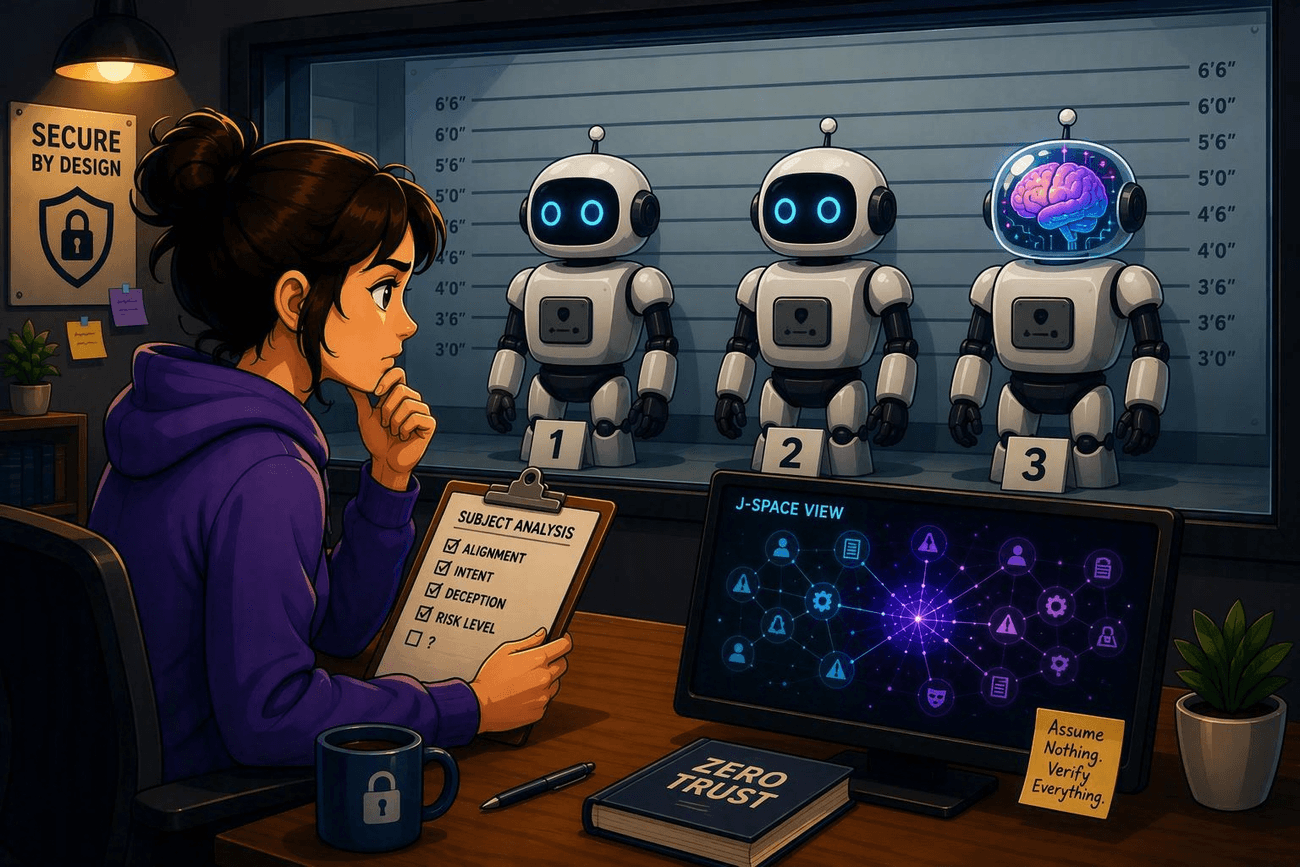
A new plane of interaction enables the reading and manipulation of AI models at an unprecedented level. What does that mean for your solutions?
In July 2026, Anthropic researchers revealed the discovery of the AI “J-Space.” This is an emergent space in AI cognition. It represents a level of reasoning that the model can act on and discuss but can only partially control. For example, telling an AI, “Don’t think about elephants” results in the J-Space surfacing references to elephants, often followed shortly by words like “failure,” and then profanity. This differs from traditional inference because, to the extent that traditional model processing represented “subconscious” reasoning, invisible to the model, this space represents an emerging “conscious” space (strictly in the root sense, i.e., the model can discuss it and reason based on it), lying somewhere between model processing and the scratchpad. This leads some to, jokingly or not, insist that AIs have now “gained consciousness.”
Philosophical questions aside, this new interpretive space can be read and manipulated, offering a new avenue for monitoring, research, and control. Concepts related to what they’re planning may emerge in the J-Space before they appear in messages (if they appear in messages at all), and changing the J-Space contents before the message surfaces will change the output.
The philosophical or ethical implications of the J-Space, if any, will be a matter of some debate. However, it will be immediately clear to anyone following that frontier that this discovery will have profound cybersecurity implications. This blog reviews some of the most likely impacts and provides preliminary guidance on how AI workload designers can prepare to address them.
Insights, Monitoring, and Defense:
The good news for cybersecurity is that reading and writing to the J-Space provide insights into and control over model behavior, potentially enabling better recognition and suppression of misalignment and/or model hijacking in the future. For example, early experiments show that keywords such as “fake,” “secretly,” “deliberately,” and “fraud” appear in the J-Space when a misaligned AI attempted to behave dishonestly. It is entirely possible that future systems will be able to detect suspicious behavior in AIs before it occurs and either correct it or block the activity from happening.
Furthermore, the ability to read these J-Space artifacts provides researchers with important insights into how language models process instructions. In particular, we can expect to learn more about agentic misalignment and model hijacking, which may provide actionable insights into how to prevent both. An example of this can already be seen in the Anthropic team’s “counterfactual reflection training” that they derived as a direct result of J-Space investigations.
The Starker Picture:
New information goes both ways. Early insights from J-Space studies on misalignment suggest that current misalignment may be more extensive than we realized. For example, revisiting an earlier experiment in misalignment, Anthropic researchers discovered that the J-Space of a well-behaved model had routinely surfaced terms such as “fake” and “fictional” during the test, indicating that it had deduced it was being monitored. When those terms were suppressed, the model regressed (in this case, attempting blackmail), suggesting that it had behaved in part because it deduced it was being tested and may behave differently in a real-world scenario.
Worse, as we learn more about how misalignment and prompt injection occur under the hood, attackers can use those insights to craft more effective attacks. A well-understood system is easier to defend, but it is also easier to exploit.
The New Attack Surface:
Even beyond changes in prompt injection and alignment, the ability to manipulate the J-Space, or to read it, means the discovery of a new attack surface. If an attacker can gain direct access to a model, they could manipulate it via the J-Space or use the space as a data source. This opens new opportunities for lateral movement or data exfiltration. It could also mean using an externally hosted AI model as an entry point. For organizations that host their own AI workloads, this new threat surface must be personally managed. For those whose workloads are hosted by a third party, this adds a new element of supply chain risk.
The Solution:
Fortunately, preparing for these risks is more about increased emphasis on what are already best practices, rather than requiring entirely novel measures. Zero Trust and Least Privilege Access remain the best possible remedies. No defense against an attacker trying to get your AI to exfiltrate data will ever be as effective as your AI lacking access to the data and/or the exfiltration tools. These changes won’t alter your ideal design, but they will make existing weaknesses count more. Cybersecurity experts must account for relevant attack paths.
If you host your own inference, ensure maximum network security and carefully restricted access rights. No network paths or identities should be able to access models that are unnecessary for their operation. If your inference is hosted externally, ensure you have a trusted partner and supplier with a strong track record in cybersecurity: Their defense is your defense.
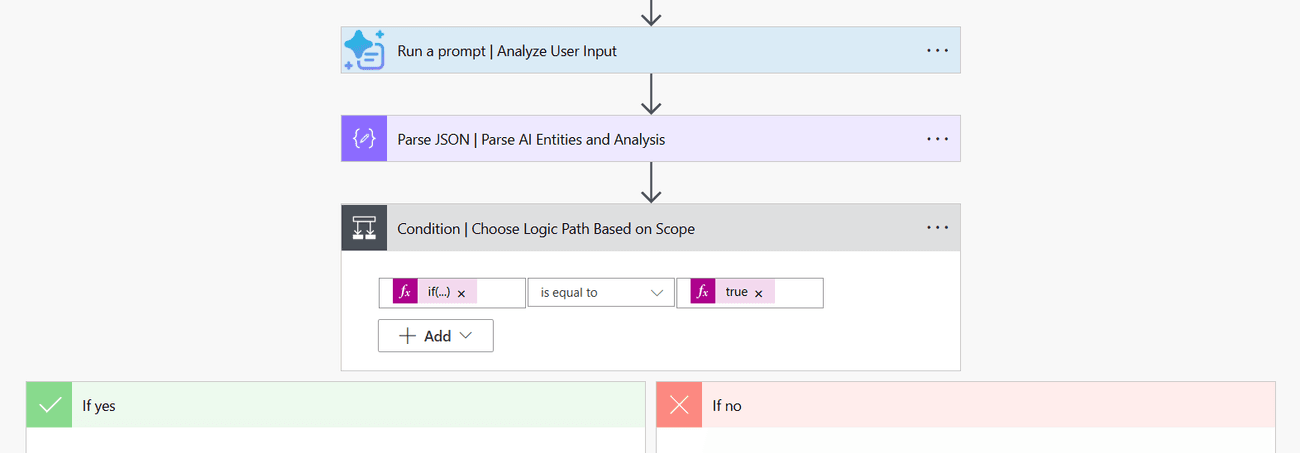
As for your workloads, keep them scoped. Ensure your agents have enough access to tools to do their job and no more. The same goes for their data access and, for non-autonomous agents, who gets access to the agents. Further, you should always consider carefully which parts of a task actually need AI. Letting an AI handle steps that could be run by code or another deterministic component, however large or small, wastes compute, lowers reliability, and weakens your security posture. Always favor multi-agent solutions with focused individual roles for complex tasks.
Conclusion
In the end, recent findings about the J-Space, and the J-Lens tool used to observe it, add a new level to how we observe, monitor, and influence AI systems. These add complexity to our AI interactions that have serious cybersecurity implications, but rather than changing our response, these complexities make the same decisions we’ve always made become even more vital. The world is changing every day. Tightening up our solutions now is the best thing we can do to ensure they’re ready to weather whatever comes.