
FabCon Europe 2026 in Barcelona: Highlights from Forward Forever
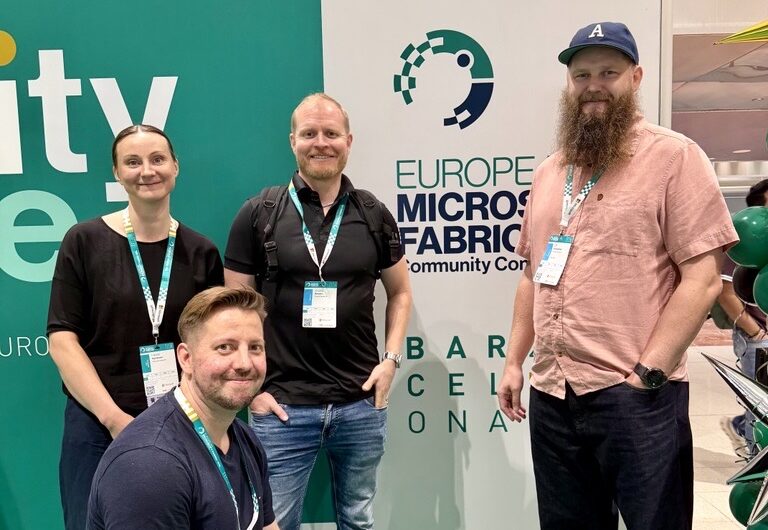
This week, four of us from Forward Forever headed to sunny Barcelona for the European Microsoft Fabric + SQL Community Conference 2026. We heard the newest from Fabric and Power BI and met fellow professionals from all over the world who share our passion for data. Here’s a short look at what the event is about, followed by our own highlights.
What is the European Microsoft Fabric + SQL Community Conference about?
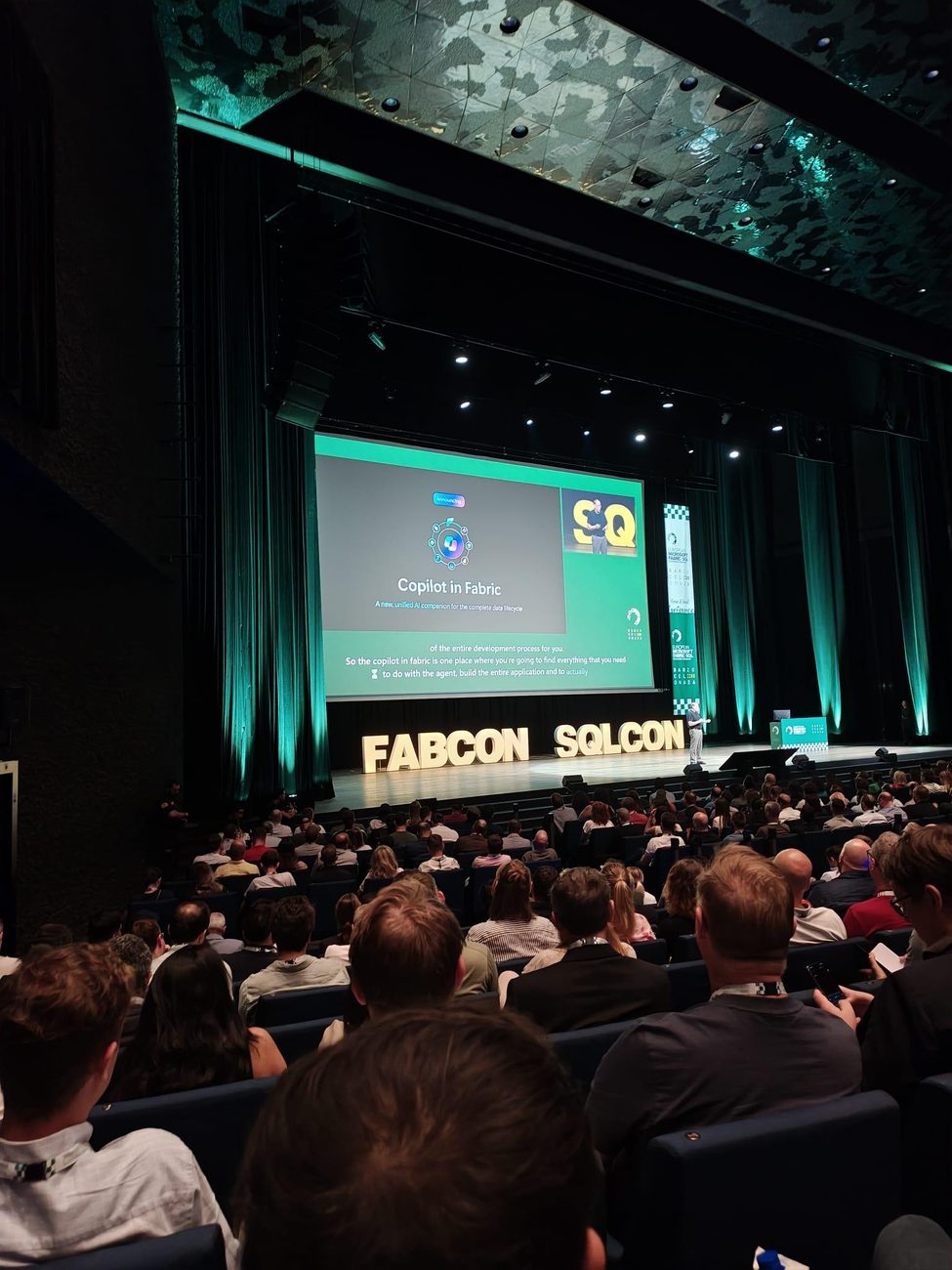
The European Microsoft Fabric + SQL Community Conference, known as FabCon Europe, took place from 28 September to 1 October at the Centre de Convencions Internacional de Barcelona, with FabCon and SQLCon co-located so one registration covered both.
The program included 130+ expert-led sessions, 100+ speakers and 10+ hands-on tutorials on topics ranging from AI and data agents to real-time intelligence, data engineering, governance and SQL. Last year’s event in Vienna brought together more than 4000 data professionals, and Barcelona was set to be even bigger.
As with any community event, the best part is the people. Microsoft product teams, MVPs, partners, practitioners and first-time attendees all come together to share what they’ve learned and help each other forward.


Insights from the Forward Forever team
Heidi, Data Advisor:
One of the biggest announcements from FabCon for me was that Power BI data is now available directly in Microsoft Copilot.
This means users can interact with Power BI data in the same place where they already work with other Microsoft 365 services, making analytics much more accessible and embedded into daily workflows.
At the same time, many organizations aren’t yet ready for this level of AI access from a governance and permissions perspective. To address that, Microsoft announced a new semantic model setting that allows organizations to control Copilot access at the semantic model level. Even better, Microsoft also announced API support for managing this setting in bulk, making it easier to govern large Power BI environments. Read more about the setting in MS Learn.
This feels like a major step forward in bringing business data closer to end users while still providing the governance controls that enterprises need.
Another feature I’m excited about is Deployment Plans.
You can now define the order in which items are deployed and execute actions before or after deployment steps. This gives teams much greater control over deployment processes and makes it easier to manage dependencies between artifacts.
A simple idea, but one that can have a big impact on enterprise deployment and release management.
Olli, CEO:
Rayfin BaaS (Backend as a Service)
Rayfin was one of the most interesting concepts showcased at FabCon. It opens up new opportunities for building applications directly on Fabric and raises interesting questions about how Fabric-native app development will evolve alongside Power Platform. For organisations working across both ecosystems, it will be interesting to see where future overlaps and distinctions emerge.
Fabric Migrations
Fabric migration success stories were everywhere. Several customers shared significant business outcomes after moving away from legacy data platforms, including seven-figure annual savings. It was great to get a shout-out for FF from one of the speakers for helping them get started on the journey. The message was clear: Fabric migrations represent a major opportunity for both customers modernizing their data estates and partners helping them deliver those transformation projects.
Practical Features Win the Biggest Applause
One observation that never changes at expert conferences: the loudest applause goes to the most practical features. Vision and strategy matter, but when a presenter demonstrates something that genuinely saves time, simplifies a process, or solves a long-standing pain point, that’s what really gets the audience excited.
Jouko, Data Advisor:
Estimated reading time for this weeks Fabric feature updates post is 124 minutes. That tells the story quite well how massive amount of updates we got at FabCon this year.
From this long list, I especially recommend to pay attention to the highlighted positioning of Fabric apps. If you have not paid attention to Rayfin SDK before, now is the time. Agentic development took center stage and it was teased that Fabric apps could even be the primary way of building analytics applications in the future. This was backed by the annoucement that Fabric apps will be supported on Pro and PPU licensed workspaces as well in the upcoming weeks, so capacity not needed. This is especially relevant to organizations using E5 and E7 licencing as Power BI Pro is included.
Generating analytics solutions by prompting has of course revolutionalized the developer experience, but it also raises a lot of needs around governance and administration. With PBIP and PBIR formats now GA and projects moving more and more to Git based version control, there can be quite a bit of new processes needed in organizations to deal with the ownership, lifecycle management, identities, permissions and related questions for example. The volume of implementations can get quite high in Fabric and Power BI as potentially everyone is a developer. And this has already actualized in Power BI, even before the agentic development era.
To help with control, plenty of new admin tools where introduced, out which I’ll just highlight one here, the new Policies in Fabric module. Current tenant, workspace and capacity settings have not always supported the configurations needed and with policies we now get more granular control. This will change administration quite a bit.
It will take a moment to digest all this and then it is time to plan how do we best benefit from the new features and take them into proper use. Exciting times ahead.
Lasse, Service Advisor:
Fabric F0 PAYG Capacity (preview)
The new F0 pay-as-you-go capacity offers great flexibility for strategic capacity planning and usage. It gives organizations more room to start small, scale when needed and pay for what they actually use.
New Fabric Capacity Metrics App
The redesigned Capacity Metrics App provides deeper observability into smoothed and unsmoothed CU consumption, throttling and protection activity. You can drill down from capacity-level pressure to the individual workspaces, items and operations causing it, which makes troubleshooting much more straightforward.
General Availability of the Power BI Project (.pbip) Format
The general availability of the .pbip format brings Power BI closer to modern software development practices. It enables Git-based version control and development workflows using tools such as VS Code, which is a big step for teams who want more structure and collaboration in their BI development.
Until next time, FabCon
The European Microsoft Fabric + SQL Community Conference 2026 was a good reminder of how much the Fabric and Power BI ecosystem is moving, and how much value there is in learning from a community of practitioners. We came home with plenty of ideas to bring to our customers.
If you’re thinking about what Fabric or Power Platform could do for your organization, get in touch. We’re always happy to share what we’ve learned.